問題詳情
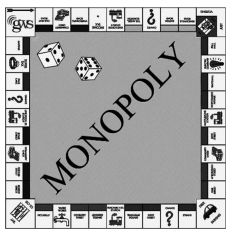
第 39 至 42 題為題組 Monopoly is a very popular board game around the world today, butlittle is known about its American inventor, Elizabeth Magie, and thephilosophy behind her invention. Born in 1866, Magie was a rebel against the norms and politics of hertimes. Inspired by Henry George who believed that all men should havean equal right to use the land as they have to breathe air, she challengedthe capitalist system of property ownership—in the form of a board game.In 1904, she patented her Landlord’s Game, which consisted of a circuitof streets and landmarks for sale.
Magie’s game contained two sets of rules: The Prosperity rules and the Monopolist rules. TheProsperity rules stated that every player should gain each time someone acquired a new property. The gamewas won (by all!) when the player starting with the least money doubled his or her fortune. UnderMonopolist rules, on the other hand, each player advanced by acquiring properties and collecting rent fromall who landed there later. Whoever managed to bankrupt the other players won the game. The purpose ofthe dual sets of rules, said Magie, was for players to understand how these different approaches to propertycan lead to different social outcomes: “all win” or “win all.”
The game soon became a hit on college campuses and among Quaker communities, and some peoplemodified the game board. An unemployed player named Charles Darrow sold this modified version to themanufacturer Parker Brothers as his own. However, when the game’s true origin came to light, ParkerBrothers bought the patent from Magie for only $500. They then re-launched the game as Monopoly,including only the rules leading to the triumph of one over all. Darrow was publicized as the inventor whohad become a millionaire from selling the game. Thus a rags-to-riches myth was created, ironicallyexemplifying Monopoly’s implicit values: Chase wealth and crush your opponents if you want to come outon top.
【題組】39. What is this passage mainly about?
(A) The creation and modification of a board game.
(B) A fight between patent owners of a popular game.
(C) A socio-economic victory behind a landlord game.
(D) The person who became a millionaire from a fun game.
Magie’s game contained two sets of rules: The Prosperity rules and the Monopolist rules. TheProsperity rules stated that every player should gain each time someone acquired a new property. The gamewas won (by all!) when the player starting with the least money doubled his or her fortune. UnderMonopolist rules, on the other hand, each player advanced by acquiring properties and collecting rent fromall who landed there later. Whoever managed to bankrupt the other players won the game. The purpose ofthe dual sets of rules, said Magie, was for players to understand how these different approaches to propertycan lead to different social outcomes: “all win” or “win all.”
The game soon became a hit on college campuses and among Quaker communities, and some peoplemodified the game board. An unemployed player named Charles Darrow sold this modified version to themanufacturer Parker Brothers as his own. However, when the game’s true origin came to light, ParkerBrothers bought the patent from Magie for only $500. They then re-launched the game as Monopoly,including only the rules leading to the triumph of one over all. Darrow was publicized as the inventor whohad become a millionaire from selling the game. Thus a rags-to-riches myth was created, ironicallyexemplifying Monopoly’s implicit values: Chase wealth and crush your opponents if you want to come outon top.
【題組】39. What is this passage mainly about?
(A) The creation and modification of a board game.
(B) A fight between patent owners of a popular game.
(C) A socio-economic victory behind a landlord game.
(D) The person who became a millionaire from a fun game.
參考答案
答案:A
難度:適中0.6
書單:沒有書單,新增
難度:適中0.6
書單:沒有書單,新增