問題詳情
75. 55 歲男性夜間喘至門診,以下是他的 PSG下列敘述,何者錯誤?
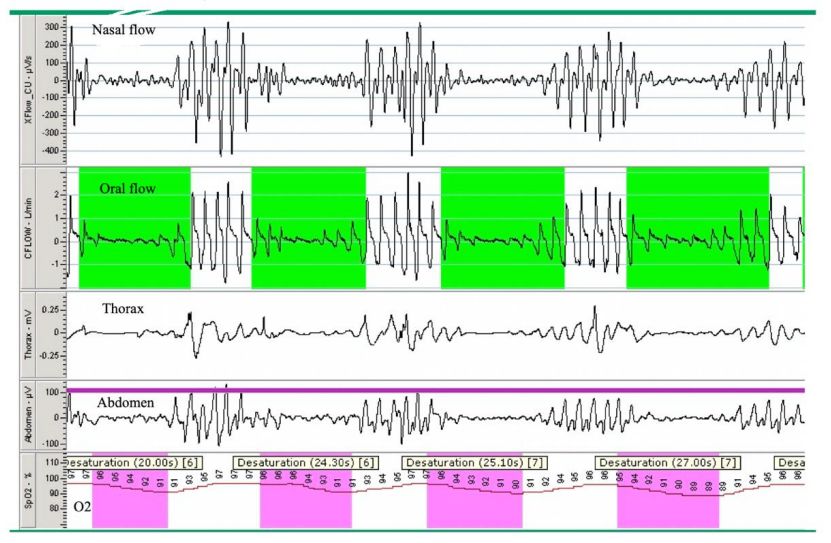
(A)Cheyne-Stokes respiratory pattern,是屬於 non-hypercapnic central apnea, 常見於 heart failure, can exist during both sleep and wakefulness,
(B)In heart failure, a key factor destabilizing the respiratory control systemand predisposing to Cheyne-Stokes respiration with central sleep apnea(CSR-CSA) is the presence of chronic hyperventilation that lowers arterialPCO2 both during wakefulness and sleep and maintains it close to the apneathreshold
(C)Loop gain is the ratio of ventilatory output to a given stimulus. The mainfactor contributing to the instability and hyperventilation of CheyneStokes respiratory in heart failure is decreased loop gain.
(D)依 2016 年 American Academy of Sleep Medicine 最新 guideline, Adaptiveservoventilation (ASV)僅能用於治療 LVEF > 45% or mild CHF-related CSAS
參考答案
答案:C
難度:計算中-1
書單:沒有書單,新增
難度:計算中-1
書單:沒有書單,新增
用户評論
【.】評論
(A) 正確。Cheyne-Stokes呼吸模式是屬於非高碳酸血症的中樞性呼吸暫停,常見於心臟衰竭患者,且可能在睡眠和清醒時都存在。(B) 正確。在心臟衰竭的病人中,一個使呼吸控制系統不穩定且容易出現Cheyne-Stokes呼吸和中樞性睡眠呼吸暫停(CSR-CSA)的關鍵因素是存在慢性過度換氣,這會使動脈內PCO2在清醒和睡眠時都下降,並保持接近呼吸暫停的臨界值。(C) 錯誤。Loop gain描述了對於給定刺激的呼吸輸出的比例。在心臟衰竭患者的Cheyne-Stokes呼吸中,主要的不穩定性和過度換氣是由於增加的loop gain,而不是降低的loop gain。(D) 正確。根據2016年美國睡眠醫學學會的最新指南,自適應伺服通風(Adaptive servoventilation, ASV)只能用於治療左心室射血分數(LVEF)>45%或輕度CHF相關的中樞性睡眠呼吸暫停症候群(CSAS)。總結:選項 (C) 描述了Cheyne-Stokes呼吸在心臟衰竭中的不穩定性和過度換氣是由於loop gain降低,這是不正確的。事實上,增加的loop gain是該病態的主要原因。