問題詳情
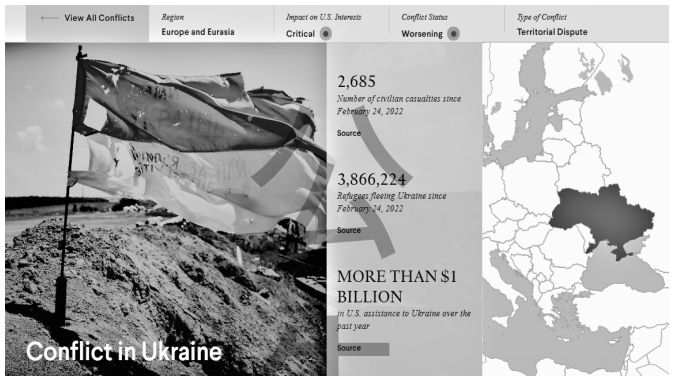
Ⅳ. Reading Comprehension Since Russia launched a full-scale military invasion into Ukraine on February 24, 2022, fightinghas caused many civilian deaths and pushed Ukrainians to flee to neighboring countries—the majority ofwhom have arrived in Poland, a NATO country where U.S. troops are preparing to offer assistance torefugees.
In March 2014, Russian troops took control of Ukraine’s Crimea region. Vladimir Putin cited theneed to protect the rights of Russian citizens, and then formally annexed the peninsula after Crimeansvoted to join the Russian Federation in a disputed local referendum. Two months later, pro-Russianseparatists in the Donetsk and Luhansk regions of eastern Ukraine held a referendum to declareindependence from Ukraine. Armed conflict in the region quickly broke out between Russian-backedforces and the Ukrainian military.
【題組】36. According to the report, which of the following is NOT a reason for Russia’s invasion intoUkraine?
(A) The conflict between the forces supported by Russia and Ukrainian military in easternUkraine.
(B) Russia’s unwillingness about Ukraine’s possibility of participating in NATO.
(C) The U.S.’s and NATO’s military activity in Eastern Europe and Central Asia.
(D) Poland’s humanitarian assistance to a great number of Ukrainian refugees.
In March 2014, Russian troops took control of Ukraine’s Crimea region. Vladimir Putin cited theneed to protect the rights of Russian citizens, and then formally annexed the peninsula after Crimeansvoted to join the Russian Federation in a disputed local referendum. Two months later, pro-Russianseparatists in the Donetsk and Luhansk regions of eastern Ukraine held a referendum to declareindependence from Ukraine. Armed conflict in the region quickly broke out between Russian-backedforces and the Ukrainian military.
【題組】36. According to the report, which of the following is NOT a reason for Russia’s invasion intoUkraine?
(A) The conflict between the forces supported by Russia and Ukrainian military in easternUkraine.
(B) Russia’s unwillingness about Ukraine’s possibility of participating in NATO.
(C) The U.S.’s and NATO’s military activity in Eastern Europe and Central Asia.
(D) Poland’s humanitarian assistance to a great number of Ukrainian refugees.
參考答案
答案:D
難度:簡單0.75
書單:沒有書單,新增
難度:簡單0.75
書單:沒有書單,新增
用户評論
【謝謝】評論
36、根據報告,下列哪項不是俄羅斯入侵烏克蘭的原因? (A)俄羅斯支持的部隊與烏克蘭軍隊在烏克蘭東部的衝突。 (B) 俄羅斯不願烏克蘭參與北約的可能性。 (C) 美國和北約在東歐和中亞的軍事活動。 (D) 波蘭向大量烏克蘭難民提供人道主義援助。